Visual Power in a Competitive Funding Landscape

by Sara Zia Ebrahimi
In 2025, I worked with a small cohort of People’s Media Fund (PMF) grantees to help them build elements of their “fundraising infrastructure”—the tools and processes needed to raise funds more effectively. This included creating a fundraising deck, supporting graphic design materials, and an annual fundraising plan. The idea was originally conceptualized and launched in collaboration with graphic designer Raquel Hazell and completed with graphic designer Michaela B. Williams.
We called the project "The Fundraising Lab" because it was an experiment that asked the question, "What would happen if a group of organizations with budgets under $1 million and no dedicated fundraising staff were given focused support to create a fundraising plan and accompanying design materials?" The project was grounded in the following core concepts:
- Fundraising is not just about having a compelling mission. It is closely tied to the visual cues you give through your organizational aesthetic choices.
- Branding is not just a tool of profit-driven marketing, but is a part of community organizing.
- Visual storytelling through graphic design is an essential tactic, not a luxury, for social change movements.
Fundraising is Drag
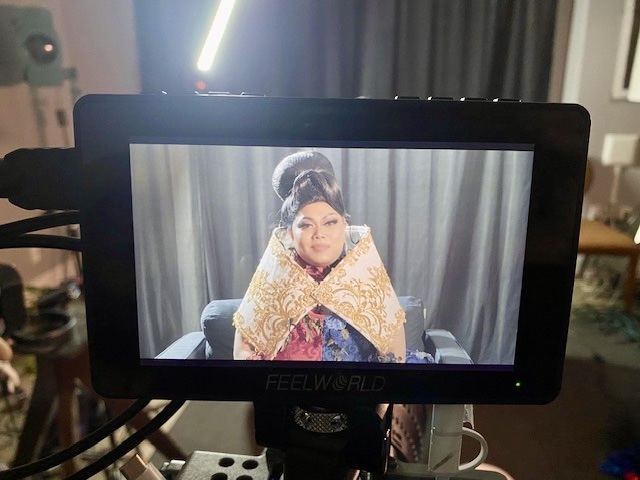
Photo credit: Drag Arts Oral History Project
Graphic design shows people how to treat you.
There’s arguably all kinds of respectability politics baked into that statement. An immediate response might be I shouldn’t have to wear a suit to be treated with respect. I shouldn’t have to have a glossy magazine for someone to want to read my ideas.
I welcome the unpacking of this idea. But I’d also like to add to the conversation the words of the great drag queen RuPaul, that all of life is drag. We’re all always performing some identity or social construct in how we present ourselves aesthetically. The question is: which way would you like to present yourself aesthetically today?
I apply RuPaul’s thinking to my approaches to designing materials for communications and fundraising. Find the space where you can still be true to yourself, know your boundaries, but also wear the drag needed to get your community what it needs. If you want a camera company to give you $100,000, your design materials need to look like you can handle $100,000. That’s the game right now. I don’t support it, I don’t think it’s right, but if you want to fundraise with larger corporate gifts, in my opinion, that is the drag outfit it takes: a well-designed fundraising deck with a consistent color palette, logo, language, and images as all your other materials. It’s still your politics, your vision, your people in the materials. It’s just in the language and grammar of unified branding that communicates: I got this.
Branding is Community Organizing
PMF Grantee Kensington Voice's Logo. Photo credit: Kensington Voice
In social justice spaces, many of us tend to associate “branding” with the capitalist drive to convince us to consume, often through trickery and manipulation, and toward a goal of profit over dignity and humanity.
I am interested in shifting that relationship with branding.
In addition to branding being a culturally coded way to tell people how to treat you, I also understand branding at a larger scale to be similar to fandom or religion. Both are ways for people to feel a part of something larger than themselves. It’s a way to have shared iconography that communicates a sense of belonging and a way to identify shared beliefs, experiences, and origin stories.
And ultimately, this is what community organizing is. Bringing people together to experience something larger than themselves–their collective power–and create change.
You can build your organization’s brand as one rooted in justice, community, and joy. Branding can be larger-scale and movement-wide like the Black Panthers' Free Breakfast Program logos and posters, or the monarch butterfly of the immigrant justice movement. Or, branding can be something more micro and achievable, like all your organization’s event marketing materials having a shared look and feel that consistently communicates what your organization is about. And that reflects the beauty and dignity you want your communities to experience.
Visual Storytelling Through Graphic Design is not a Luxury
Media arts organizations understand the importance of storytelling, whether it be journalistic or narrative. But if you’re not prioritizing how you visually depict the story of your own organization’s work, how can you expect others—whether they be in your communities or gatekeepers to funding—to believe in the vital importance of storytelling and media creation?
As you sit down to plan your organization’s fundraising and community organizing strategies, how can the visuals and communications not be secondary or an afterthought? This includes a clear color palette, design templates, and consistent messaging for the year. For smaller organizations, especially, having an established brand guide will simplify the creative decision-making process for collaborating with other creatives on graphic design.
Artist Favianna Rodriguez and other cultural workers have long advocated for “cultural organizing.” This is a framework in which art is not seen as separate from community organizing. Instead of making a plan and then just bringing in an artist to make the flyer as a product-based output, organizations work with an artist from conceptualization to execution of plans.
Paying artists has always been a challenge for organizations. I’ve seen small organizations where one or two staff members or volunteers are overwhelmed and working above capacity; understandably, using an AI tool to design images feels like an easy solution at the moment, amidst budget restraints. But it raises bigger questions about how you are building equity and care into your organization’s practices? What are you modeling internally in your practices about the importance of creatives, and how does that align with your work to support mediamakers in your communities? What would it take for your organization to be able to pay artists and acknowledge their critical role in social justice movements?
A question for arts and cultural organizations in the upcoming year will be what stance they will take on AI usage, and the question for funders will be what support they will give to ensure that graphic designers, illustrators, and art directors still have a role in social justice work.
What We Learned + How to Build on the Fundraising Lab
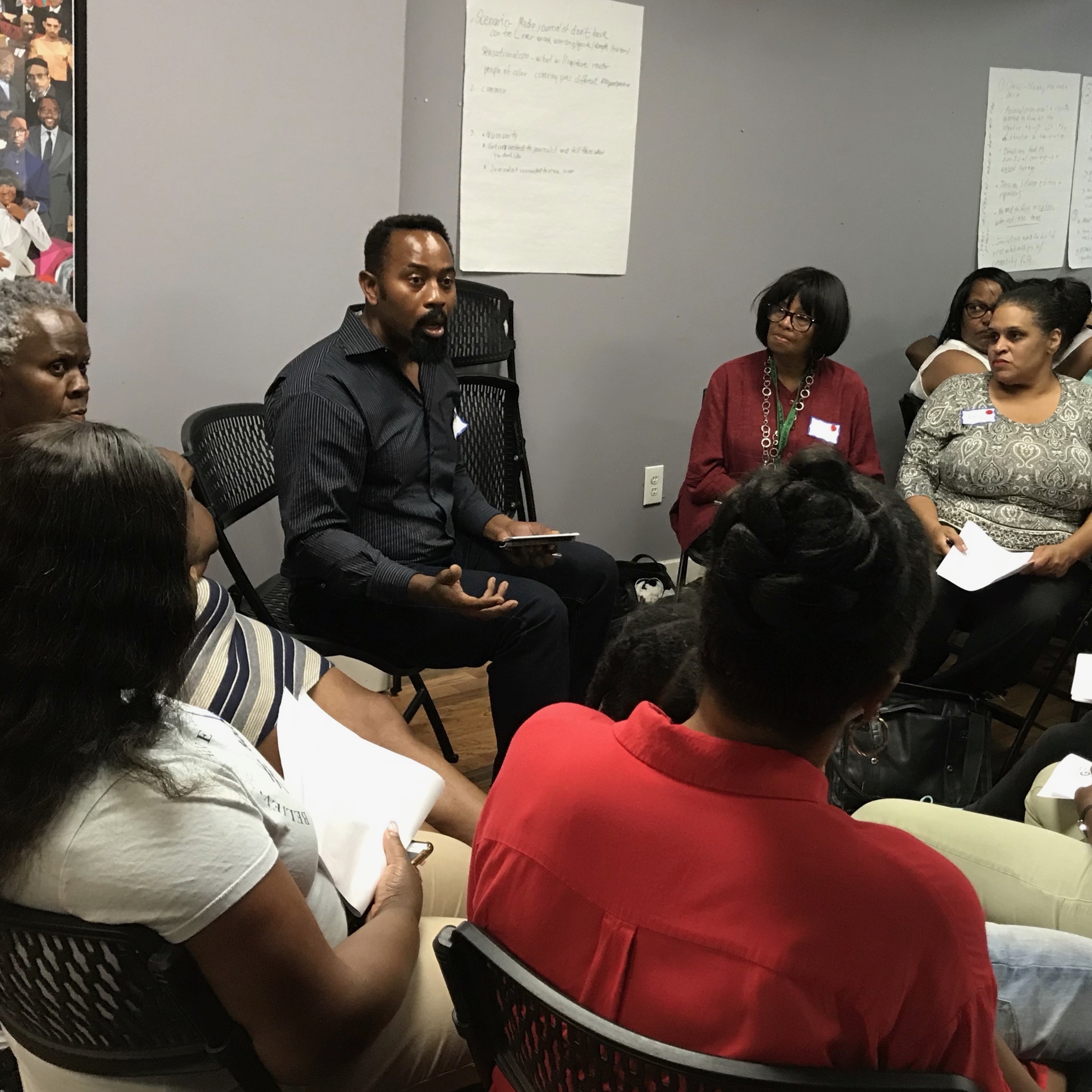
Photo credit: Germantown Info Hub
One of our main takeaways in this Fundraising Lab experiment was that we had made an incorrect assumption about why organizations were interested in the Lab, which affected the project's course. The majority of the organizations we worked with didn’t even like their logo or color palette, and believed their websites or materials didn’t accurately reflect their organization. We realized that building fundraising materials on top of an organization’s negative perception of its own brand wasn't the right first step.
What was actually needed was a full branding overhaul (much like People’s Media Fund recently did—adding new colors and design to reflect their new name). Before we could even build the fundraising-specific infrastructure, there were fundamental visual branding steps that needed to be taken. Many Fundraising Lab participants recognized the need for clearer and stronger branding. However, they lacked the time, capacity, or resources to focus on branding without compromising ongoing programs and employee salaries in the short term.
In my experience as a consultant, when I ask organizations “What do you need?”, the answer most often is: money. And yes, media arts organizations could all use more money. Lots of it. You can see how an infusion of money from PMF into the Philadelphia area over the last several years has helped sustain a more vibrant media ecosystem. Money is a tool in our world at this moment that gives you access to the things you need. But what other asks, in addition to money, can organizations make of funders to get what they need?
In this moment of political instability and deep financial constraints, old models of fundraising—such as donor appeals instead of donor organizing—may no longer be effective approaches. It is a dynamic time where organizations are finding new ways to stay afloat. There’s not a set of best practices yet for what the near future of fundraising looks like.
As we continue to reimagine what fundraising can look like in today’s world, there are two important questions for funders to consider from this experiment: How can foundations move beyond the check and traditional capacity-building workshops toward supporting other essential elements of movement-building needed? And how can it be ensured to include visual identity, branding, and communications infrastructure?
Sara Zia Ebrahimi has worked for over 20 years as a resource mobilizer, connecting artists and community organizers to the resources they need to move their work forward. She does this through fundraising, building administrative and operations processes, and weaving strong webs of relationships between individuals and organizations for the collective thriving of marginalized communities. Her past work has included positions at BlackStar Projects and the Leeway Foundation. She currently co-owns and runs Multiverse, a brick-and-mortar store in Northwest Philadelphia celebrating speculative fiction, and recently joined the team at CultureWorks as the Fiscal Sponsorships Account Manager.
Header photo credit: The Village of Arts and Humanities Staying Power Project.


